
 Facebook
 X
X LinkedIn
 Forward
Reza Mehran, MD, FACS
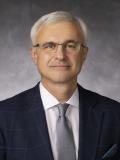
I earned my medical degree at McGill University, Montreal, Canada in 1986, and then completed postgraduate training in cardiovascular and thoracic surgery at University of Montreal. I was a Major in the Canadian Forces Medical Services 1987-2006. Following my time in the service I was an Associate Professor at University of New Mexico, Albuquerque, NM.
I joined UT MD Anderson Cancer Center in 2004. I am now a clinical professor of surgery in the Department of Thoracic and Cardiovascular Surgery. I provide expertise in the management of complex malignancies of the chest and I am also a consultant for major vascular surgery involving the abdomen and the extremities. I am a physician in charge of the outpatient facilities in Thoracic Surgery and have strived to deliver the best medical care to each and every one consulting us. As a scientist I have conducted and completed numerous clinical and translational research. I have been instrumental in developing a new algorithm in the management of early stage lung cancer using stereotactic body radiation therapy. With the help of my colleagues, I was also able to develop a probe to detect lung cancer in the peripheral blood using circulating endothelial progenitor cells. I have also spearheaded a new form of pain management, which has resulted in a tremendous opportunity to fast-track the care of our simple as well as complex patients on a daily basis. This has raised a great level of interest amongst my other colleagues nationwide. My extensive clinical experience and my interest in translational and clinical studies of innovative therapeutics and biomarkers for cancer is helping the goals of our institutional lung cancer moonshot projects to create new integrated paradigms for preventing, detecting and treating lung cancer.
Early in my career I adopted minimally invasive surgery of the chest as a tool to treat thoracic malignancies. I gave the first presentation on minimally invasive surgery of the chest in 1996 at the annual congress of the Royal College of Surgeons of Canada meeting, presenting my experience with the first 100 patients treated as such. My objective has always been to improve the surgical experience of our patients. I was hired at UT MDACC to expand on minimally invasive surgery. Surgeons have always focused on the intraoperative maneuvers to hope for a better patient experience. 20 years later, the results of my studies and my observations showed that first there is nothing minimally invasive in minimally invasive surgery of the chest. The rate of complications is similar to open procedures, the risk of bleeding and intraoperative complications increase and pain is no better in the early post-operative period. Even more important than the technique itself, is the optimization of the perioperative period and in a large center like ours, standardization amongst practitioners of the way we treat psychological distress related to surgery, pain, length of stay and chest tubes. I called this standardization ERATS which stands for enhanced recovery after thoracic surgery. My colleagues and I adopted this new paradigm in patient care over 6 years ago. We soon noticed that under ERATS, pain, length of stay and the general experience of the patients is significantly better, regardless of how the surgery is performed. The success of ERATS lead to the adoption of the principles of ERATS by other services in the Institution and the Nation.